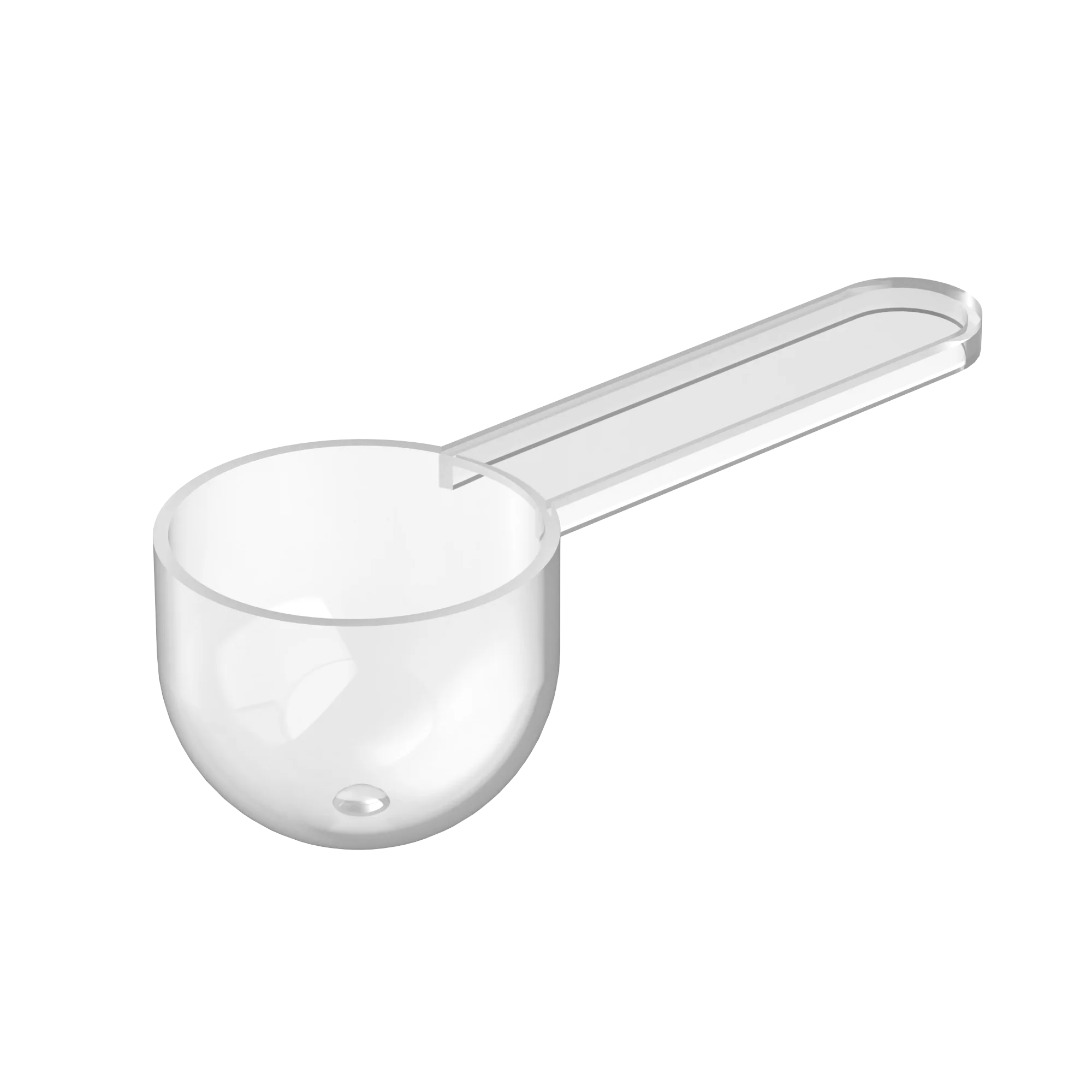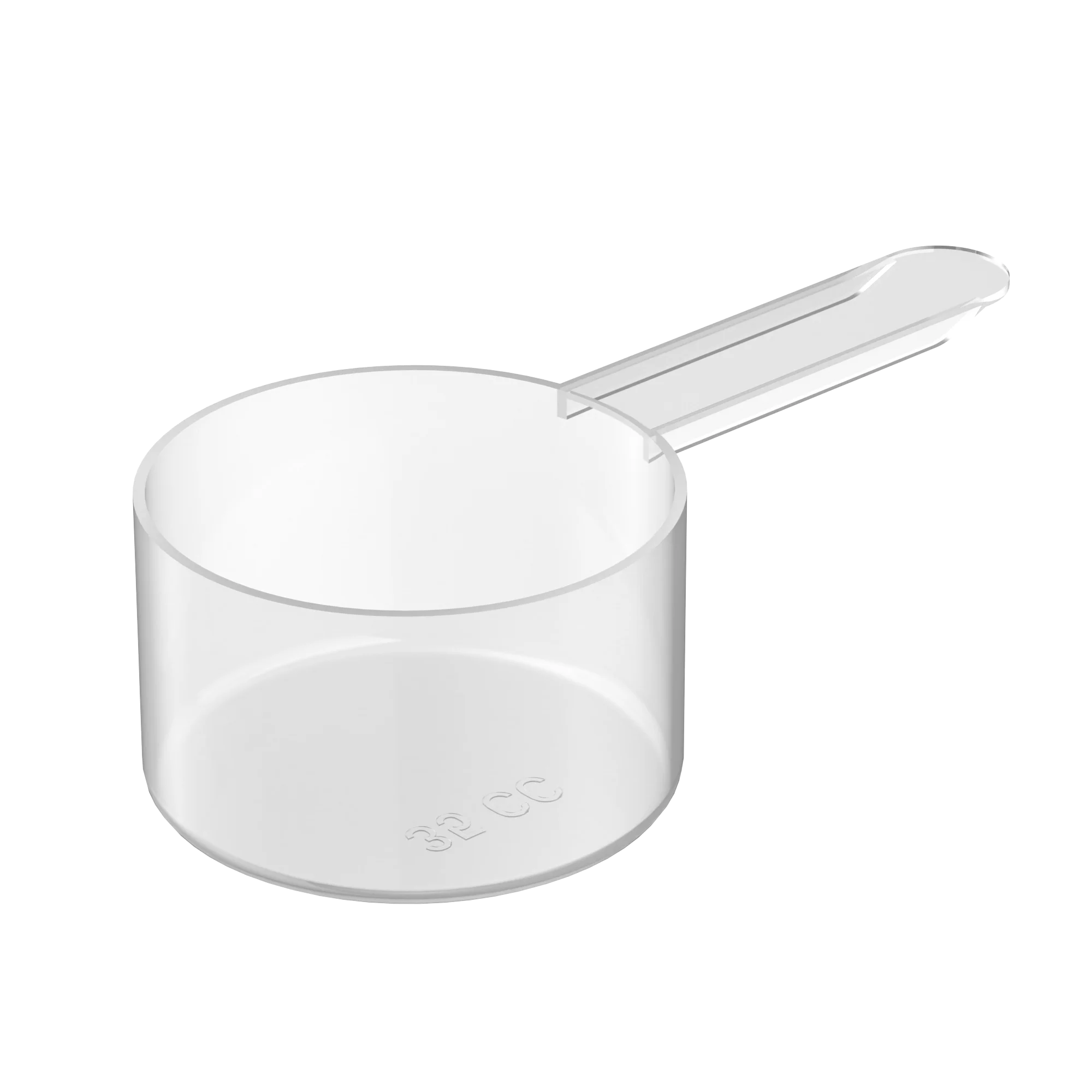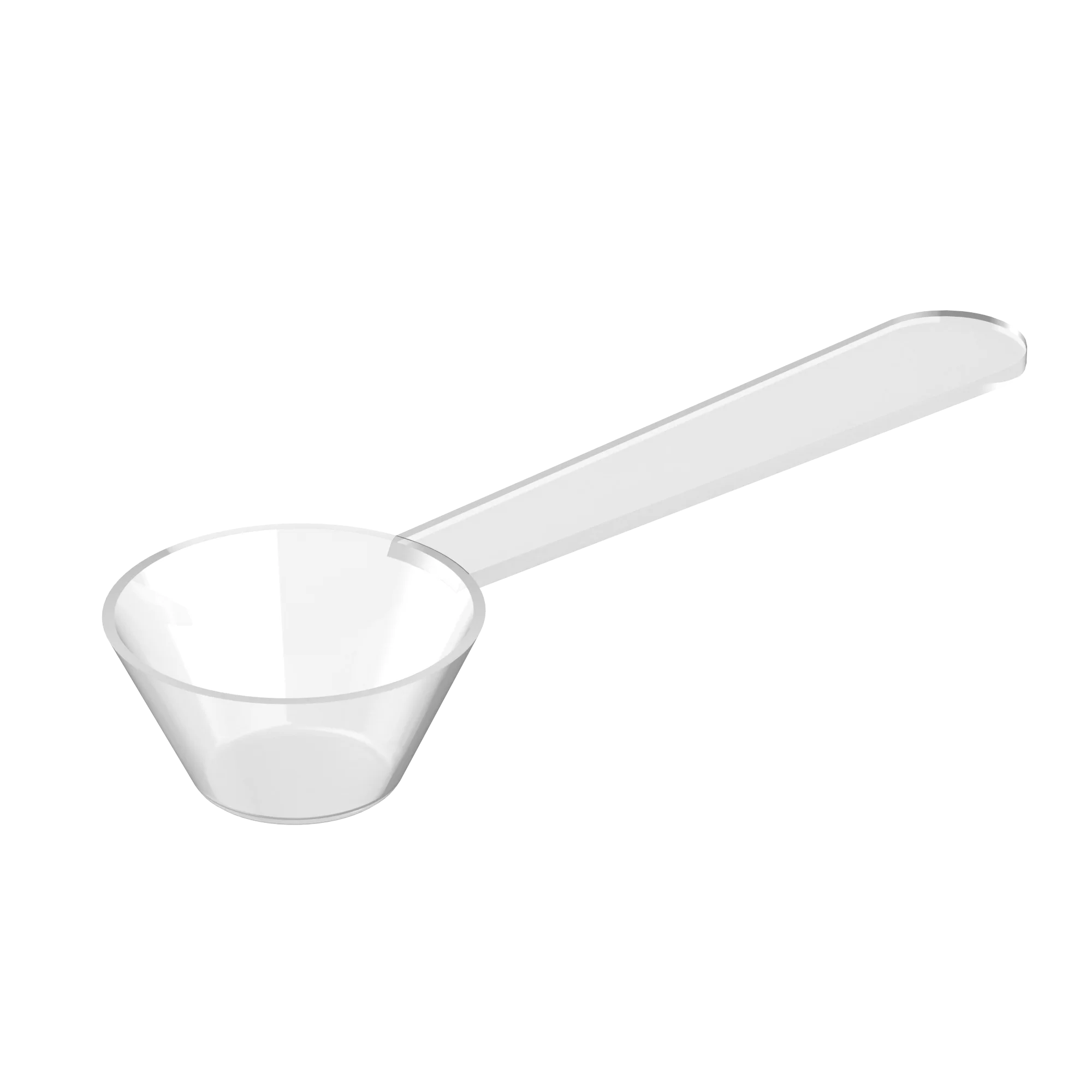

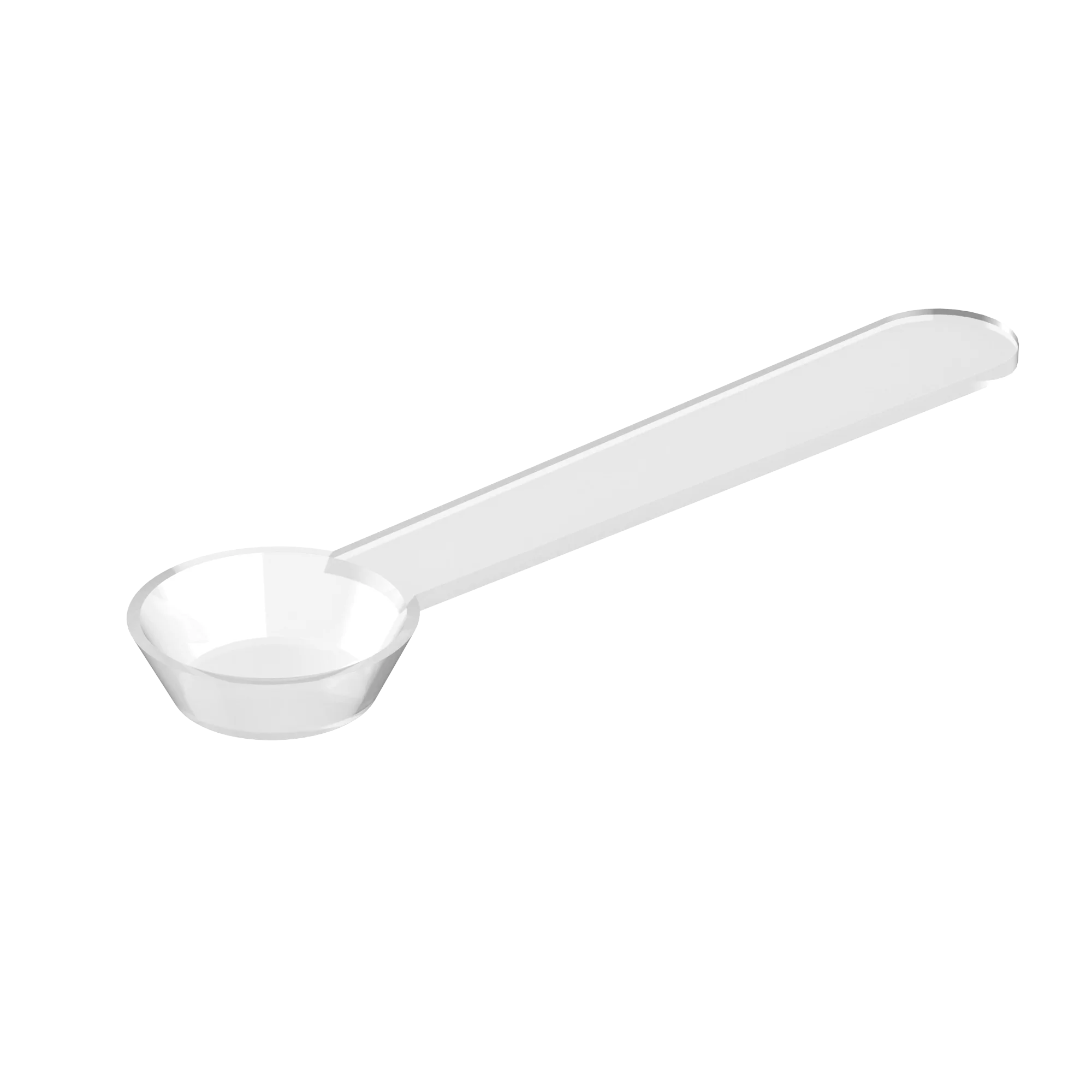
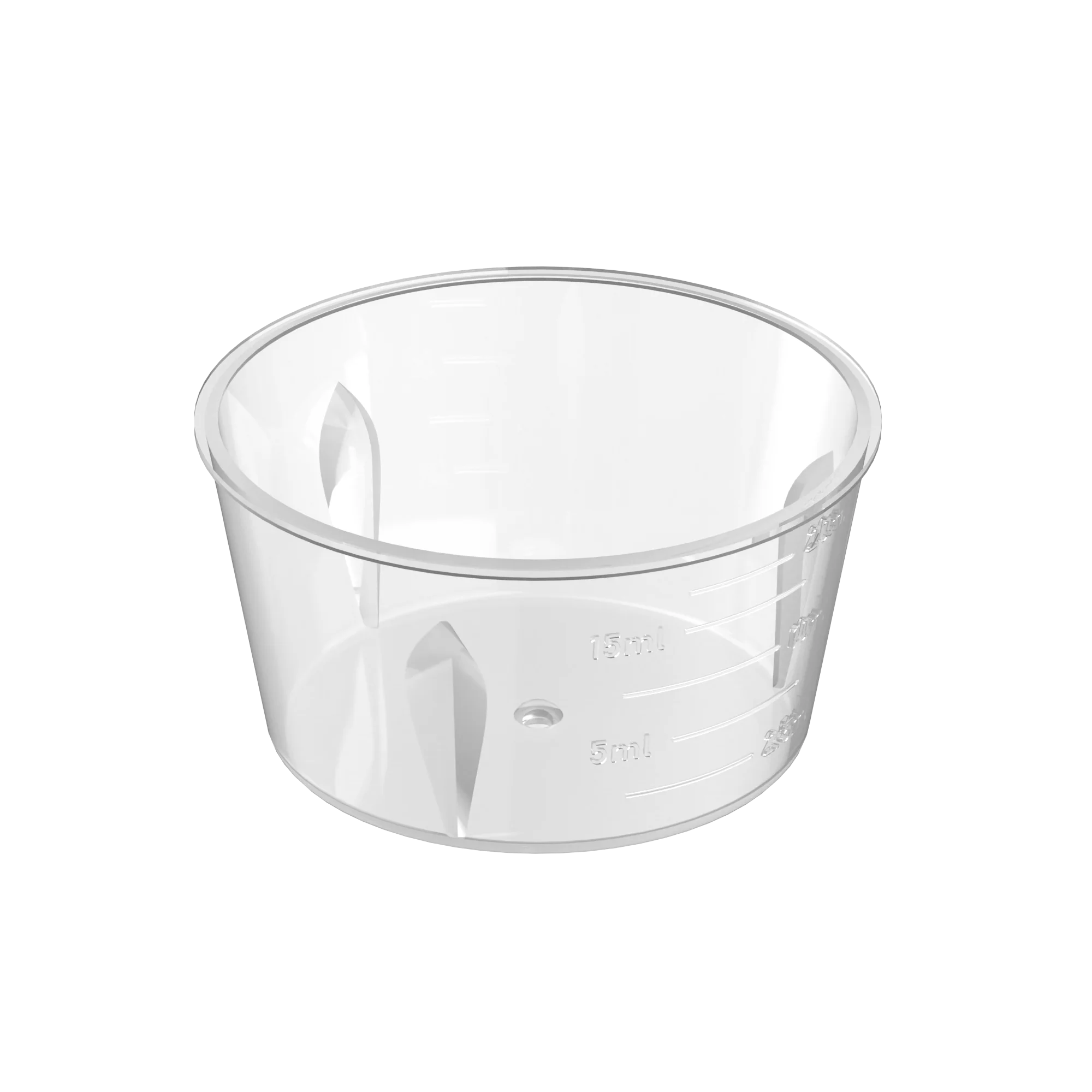
3 g Conical L-Carnitine & Powder Scoop — produced from PP (Polypropylene / Food & Heat Resistant - Code 5) raw material, 100% BPA-free and a professional packaging solution suitable for food contact.
- Weight / Tablet Capacity
- 3 g
- Material & Resin Code
- PP (Polypropylene / Food & Heat Resistant - Code 5)
- Manufacturing Method
- Injection Molding
- Functional Features & Compartments
- Short Handle Scoop
- 100% BPA-Free
- Food Contact Approved (EU 10/2011 & FDA)
- Unprinted / Neutral
- 100% Recyclable
Product Specifications
- Weight / Tablet Capacity
- 3 g
- Material & Resin Code
- PP (Polypropylene / Food & Heat Resistant - Code 5)
- Manufacturing Method
- Injection Molding
- Functional Features & Compartments
- Short Handle Scoop
- Surface Texture
- Smooth Glossy Finish
- Color Option
- Clear / Transparent
Compliance
- 100% BPA-Free
- Food Contact Approved (EU 10/2011 & FDA)
- Unprinted / Neutral
- 100% Recyclable
Technical Specifications
| Powder / Tablet Capacity | 3 g gr / adet |
|---|---|
| Body Raw Material | PP (Polypropylene / Food & Heat Resistant - Code 5) |
| Manufacturing Process | Injection Molding |
| Food & Pharma Compliance | 100% BPA-Free |
Product Description

The Right Scoop Makes the Pack Easier to Use
Once a customer opens a powder pack, the included scoop becomes part of the daily routine. Its short handle can be assessed for storage inside a jar, while the conical bowl helps direct powder toward a glass or shaker.
A 3 g class designation does not mean every powder weighs 3 g in this scoop. L-carnitine and other blends have different densities. Weigh a sample of your own formula, filled in the way your customers will use it, before setting a serving instruction.

At the Filling Bench: Design the Scoop Into the Pack
Before production, place the scoop in a filled sample jar. Check whether its handle fits, whether users can reach it as the powder level falls, and whether the bowl carries the intended portion.
A component this small shapes the first opening experience. Weighing your own powder in the nominal 3 g class scoop connects the packaging decision to a real serving.
At Home: From Powder to Drink
In the kitchen, a customer lifts the scoop from a jar of dry supplement, fills its conical bowl and tips the powder into a glass or shaker. The one-piece form keeps the preparation motion simple.
The actual mass depends on powder density and whether the scoop is levelled. Clear directions based on your own formulation help customers repeat the same preparation method.

PP Code 5 and Food Contact
The scoop is injection moulded from polypropylene, plastic code 5. The product record describes it as BPA-free, recyclable and suitable for food contact under EU 10/2011 and FDA requirements. Its smooth, clear-looking finish suits an unobtrusive packaging component.
The record also describes food and heat resistance, without a numerical temperature rating or dishwasher approval. Test the scoop with the intended powder, container and preparation method before launch.

At the Gym: A Familiar Preparation Routine
After training, a customer prepares a drink at a gym counter using the scoop stored with the powder. The short handle may work well inside a suitable pack, while the conical bowl can help guide powder toward a drink container.
Do not assume the scoop fits every container opening or works with every blend. Test the finished combination of scoop, powder and bottle in a realistic use setting.
In Product Development: Weigh the Actual Portion
A brand comparing several powder blends fills the same nominal 3 g scoop with each formula, then weighs the result. This connects the scoop specification to the serving size that will appear on the product label.
Packing density and levelling can change the outcome. Repeatability matters as much as the visual match between scoop and packaging.


At the Packaging Station: Match a Neutral Scoop to the Container
An unprinted scoop can be considered across multiple dry powder ranges. Place it beside sample jars or pouches to assess fit, reach and packing workflow before committing to the final format.
The product record does not list custom logo printing for this item, so do not plan around that option without a separate confirmation. First test the powder mass and physical fit with a sample.
For Supplement Brands: 10,000 Unit Minimum Order
OLC-003-KRN has a listed minimum order of 10,000 units. Its unprinted neutral form suits brands and contract packers evaluating one scoop geometry for several dry blends. Assess it with the intended formula and final pack.
Use the nominal 3 g class, PP code 5 material, short handle and clear gallery appearance as starting points for your request. Weigh your own blend and confirm jar or pouch fit before placing a production order.
Three Practical Points
Nominal 3 g class
Verify the actual mass with your own powder.
Short handle and conical bowl
Assess pack storage and controlled transfer.
PP code 5
BPA-free, food-contact suitable and recyclable according to the product record.
Frequently Asked Questions
Does it always hold exactly 3 g?
No. The listed 3 g class is nominal; powder density and filling method change the actual weight. Weigh your formula.
What material and process are used?
Injection-moulded polypropylene, plastic code 5.
Is it suitable for food contact?
The record states BPA-free material and food-contact suitability under EU 10/2011 and FDA requirements.
Can it be stored in a jar?
Assess the short-handled scoop in the actual jar or pouch to confirm physical fit and reach.
Can it carry a logo, and what is the MOQ?
The listed option is unprinted and no custom logo option is recorded. Minimum order is 10,000 units.