
13 / 26 cc Two-Stage Powder Measuring Scoop — made from PP (Polypropylene / Food & Heat Resistant - Code 5) raw material, 100% BPA-free and suitable for food contact, a professional packaging solution.
- Volume / Capacity
- 25 cc
- Weight / Tablet Capacity
- 13/26 cc
- Material & Resin Code
- PP (Polypropylene / Food & Heat Resistant - Code 5)
- Manufacturing Method
- Injection Molding
- 100% BPA-Free
- Food Contact Approved (EU 10/2011 & FDA)
- Unprinted / Neutral
- 100% Recyclable
Product Specifications
- Volume / Capacity
- 25 cc
- Weight / Tablet Capacity
- 13/26 cc
- Material & Resin Code
- PP (Polypropylene / Food & Heat Resistant - Code 5)
- Manufacturing Method
- Injection Molding
- Functional Features & Compartments
- Short Handle Scoop
- Surface Texture
- Smooth Glossy Finish
- Color Option
- Clear / Transparent
Compliance
- 100% BPA-Free
- Food Contact Approved (EU 10/2011 & FDA)
- Unprinted / Neutral
- 100% Recyclable
Technical Specifications
| Nominal Volume | 25 cc ml / cc |
|---|---|
| Powder / Tablet Capacity | 13/26 cc gr / adet |
| Body Raw Material | PP (Polypropylene / Food & Heat Resistant - Code 5) |
| Manufacturing Process | Injection Molding |
| Food & Pharma Compliance | 100% BPA-Free |
Product Description

Match the Marks to Your Actual Formula
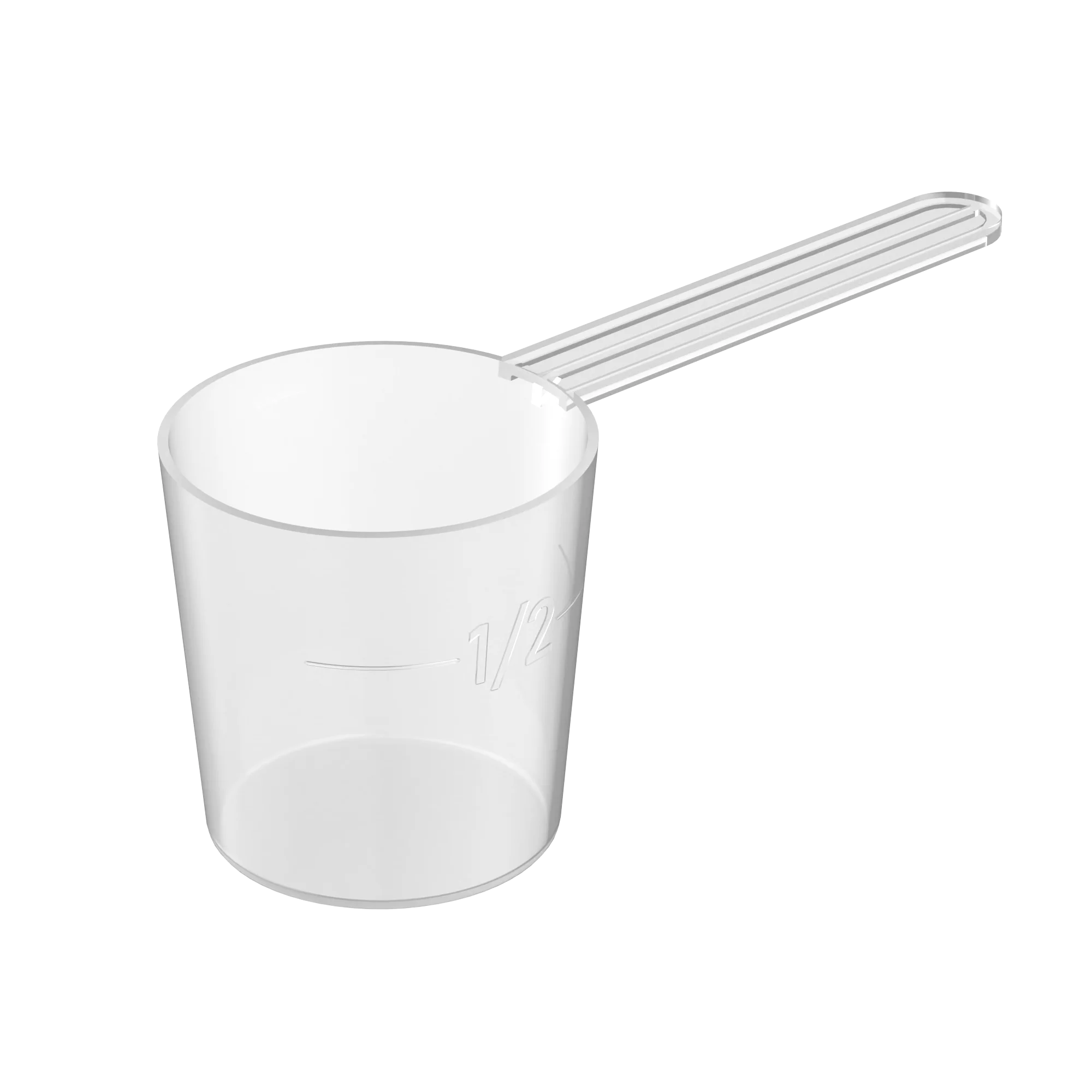
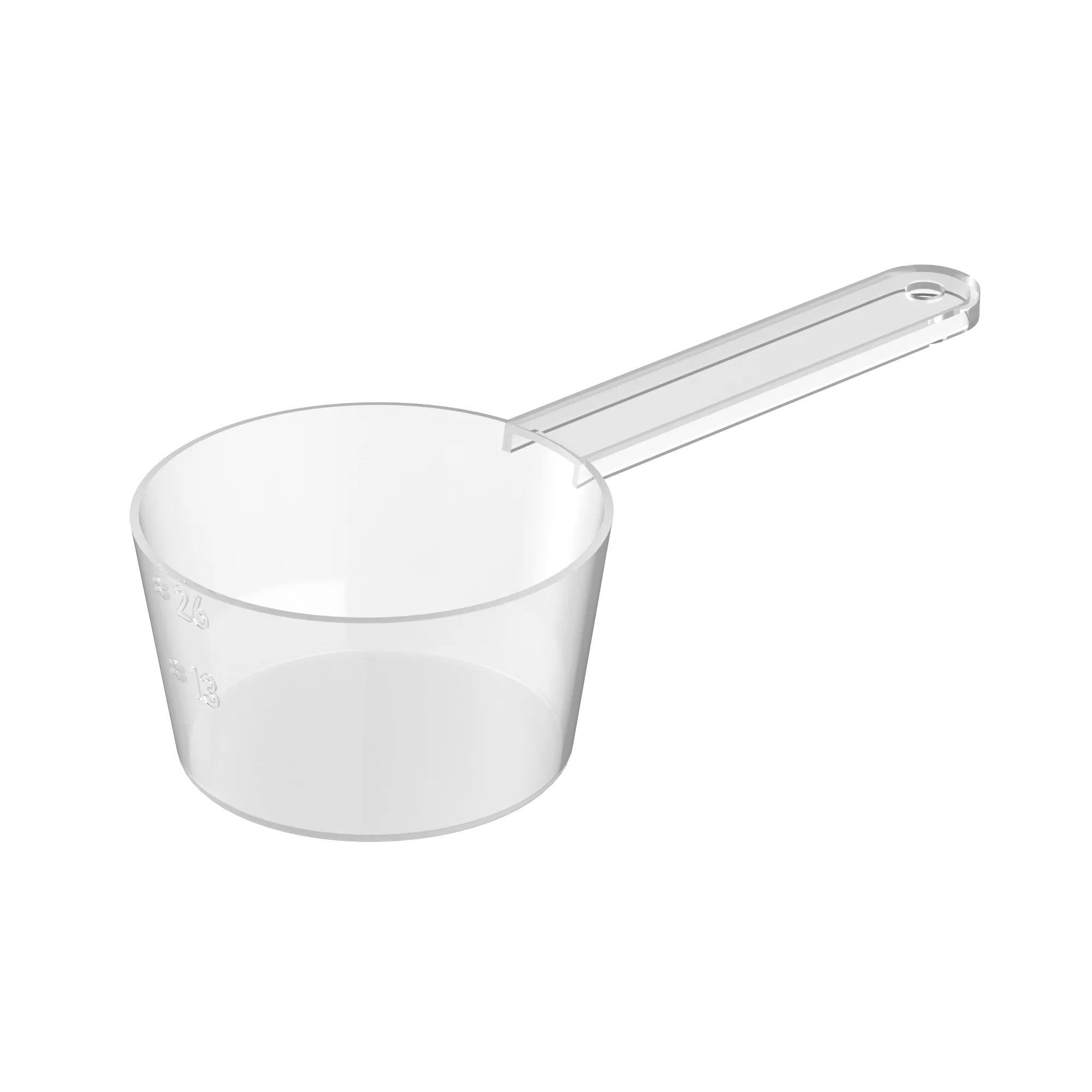
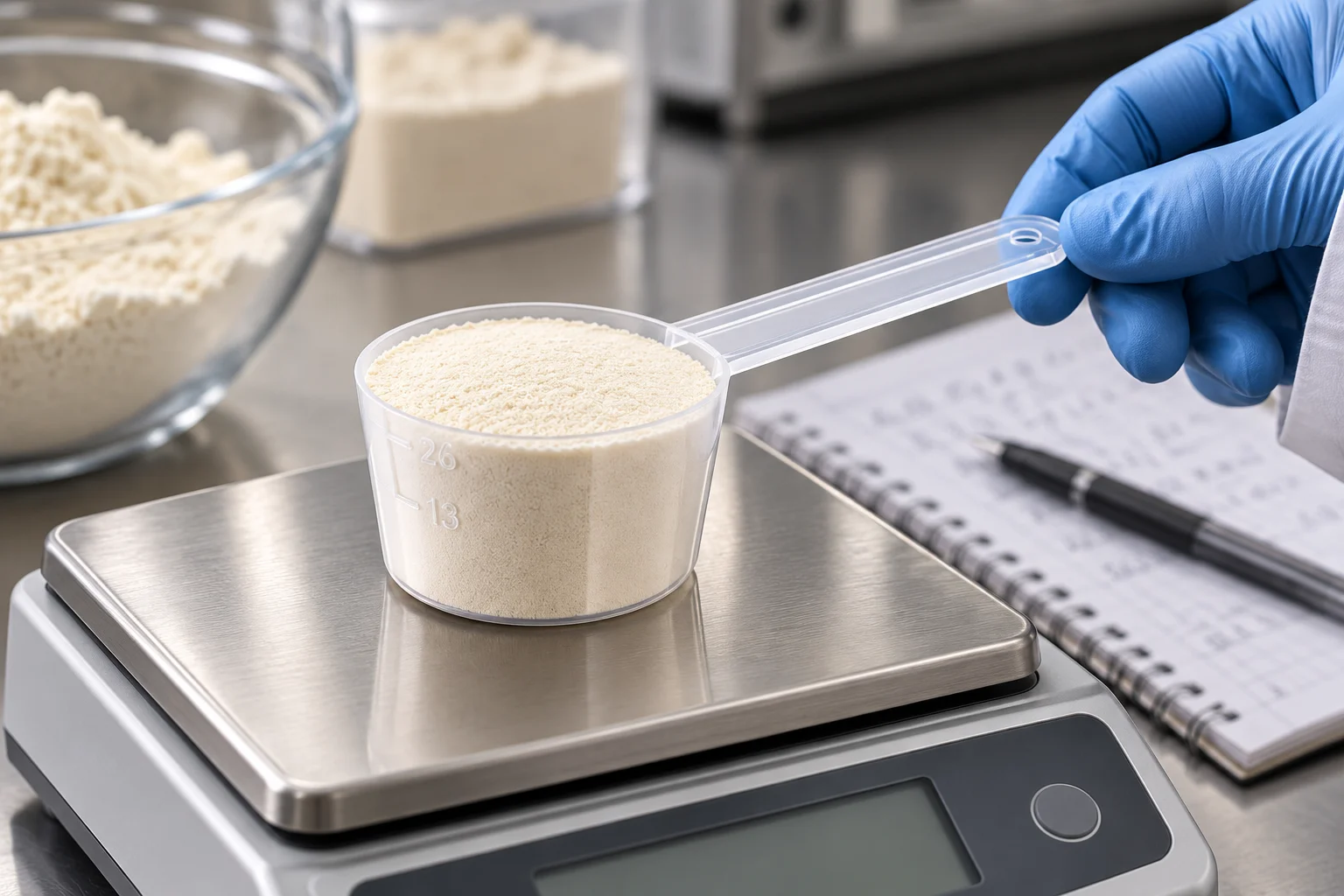
The gallery shows 13 and 26 marks, and the product name and capacity field identify these as cc references. A separate API field lists a nominal volume of 25 cc, so a precise serving weight cannot be inferred from the catalogue figures alone. Fill a sample with your own powder and check the marks, rim level and target serving together.
A scoop measures volume, not grams. Weight varies with powder density, particle size, packing and whether it is heaped or levelled. If the finished pack states a serving in grams, weigh the specific powder and state the filling method clearly in the directions.

Clear PP Code 5, Food Contact and Injection Moulding
The scoop is injection moulded from polypropylene (PP, plastic code 5). The record describes it as 100% BPA-free, suitable for food contact and recyclable. EU 10/2011 and FDA suitability are selected in product filters; review documentation for the filled product and destination market separately.
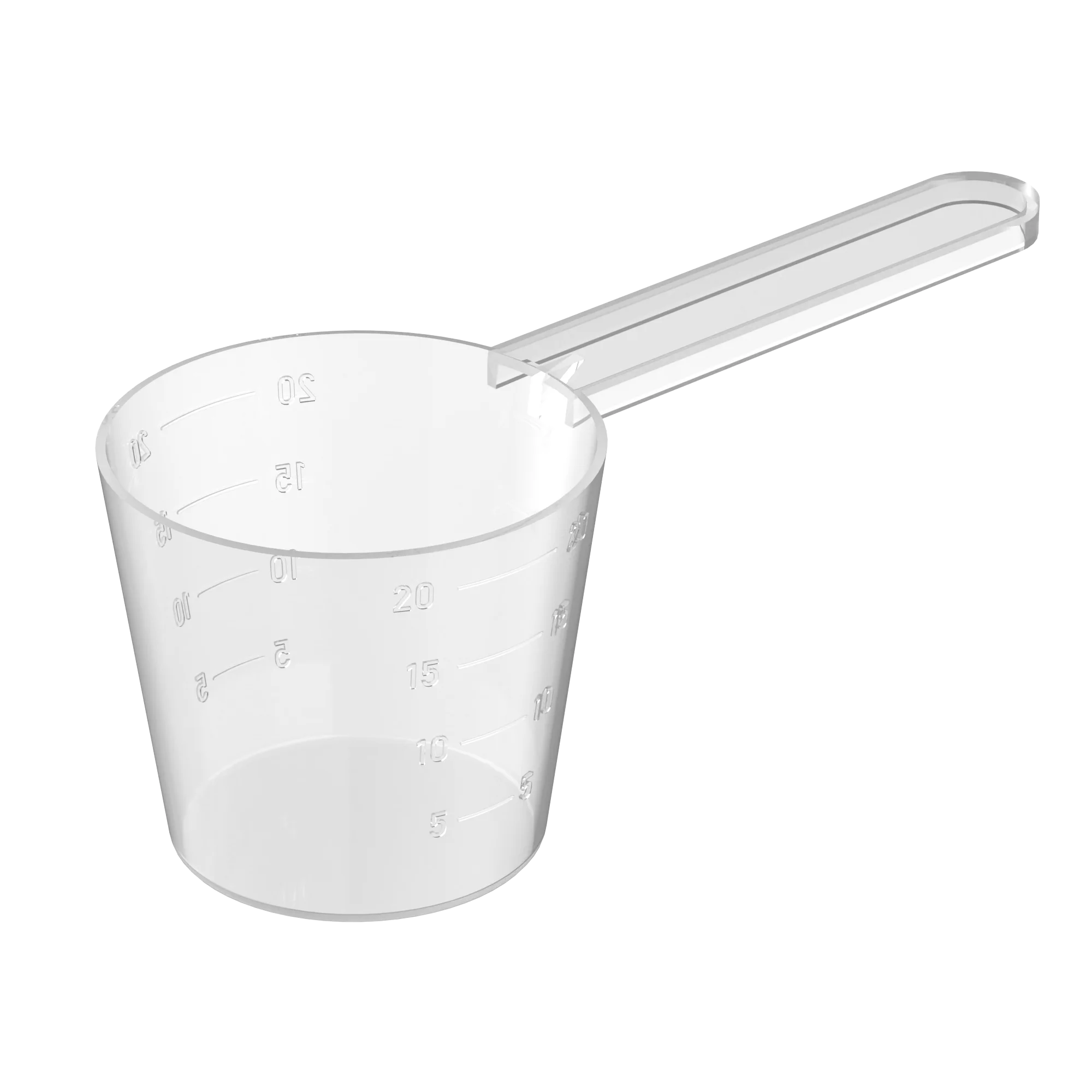
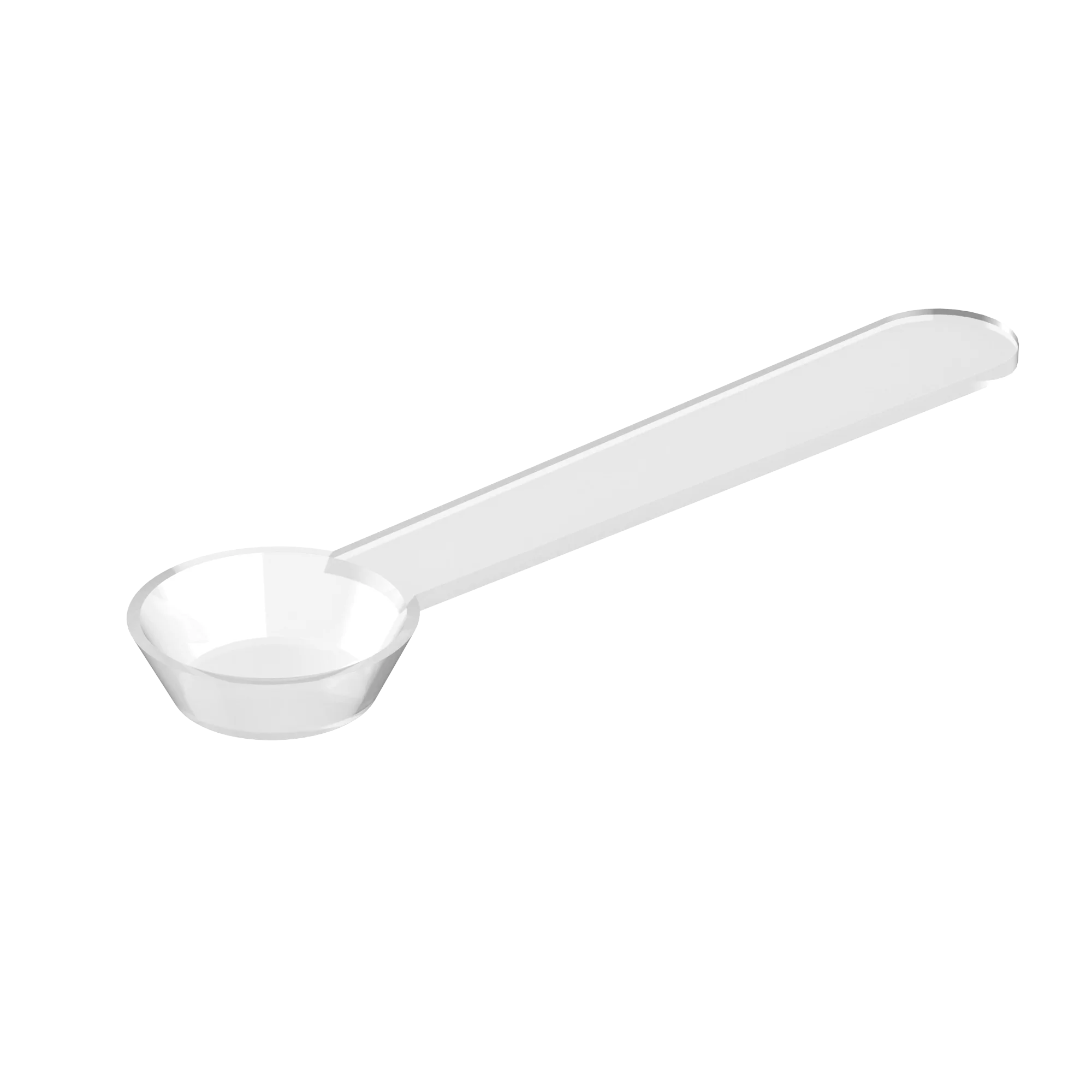
The transparent cup helps users see the level of dry powder and the side marks. Its long flat handle and a hole at the end are visible in the gallery. Heat resistance appears in the material description, but no temperature limit is supplied, so no hot-process rating is assumed.

A Consistent Starting Point for a Sports Drink
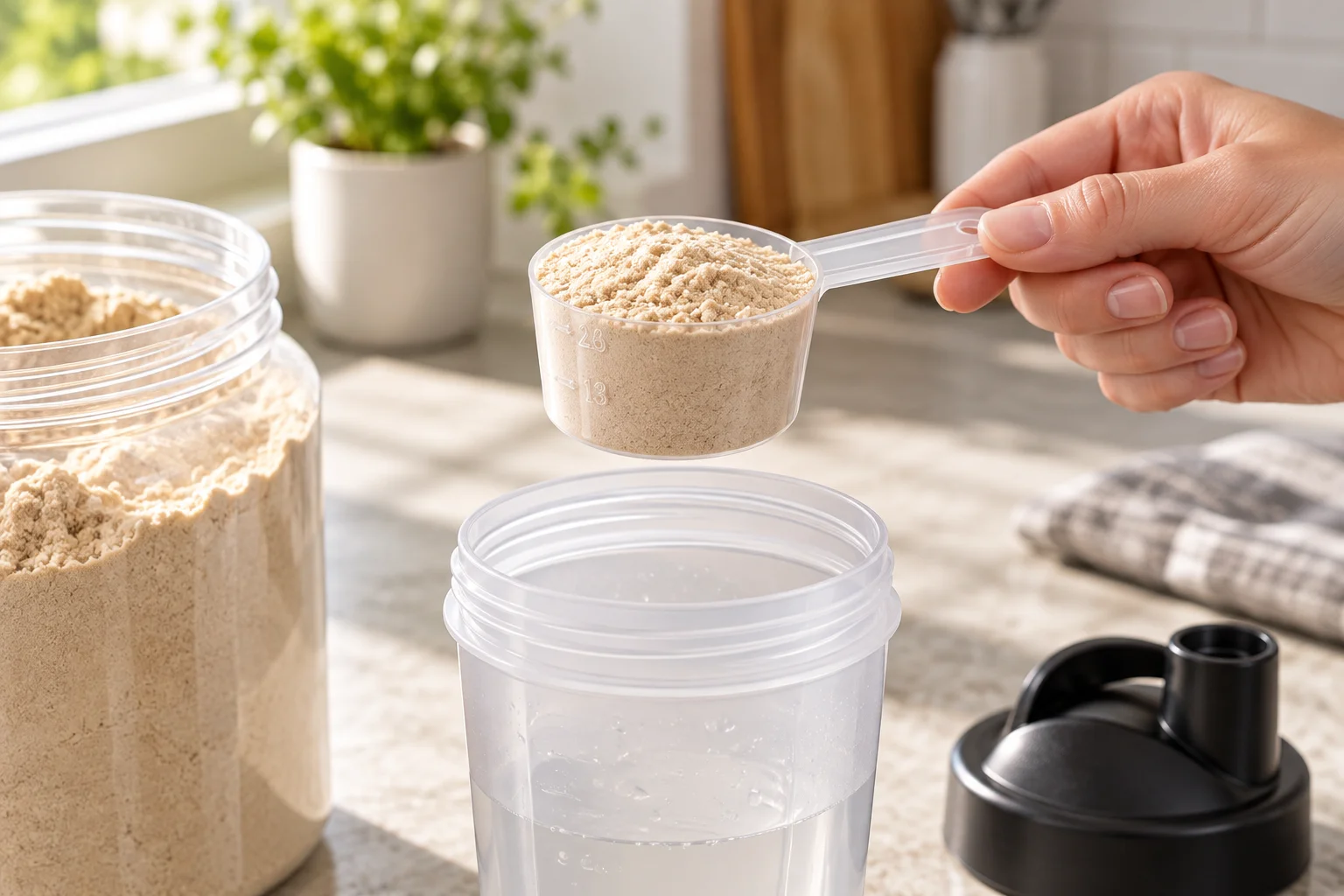
When preparing a dry beverage at home or after exercise, the scoop helps transfer powder from a jar into a shaker. The 13/26 marks offer two volume references. Only weighing your own formula can tell you which fill level corresponds to its intended serving.
Using the same level-fill method each time can improve consistency. The recommended quantity and liquid ratio belong on the finished powder’s label; the scoop itself does not establish them.
In the Kitchen, at Work and Inside the Pack
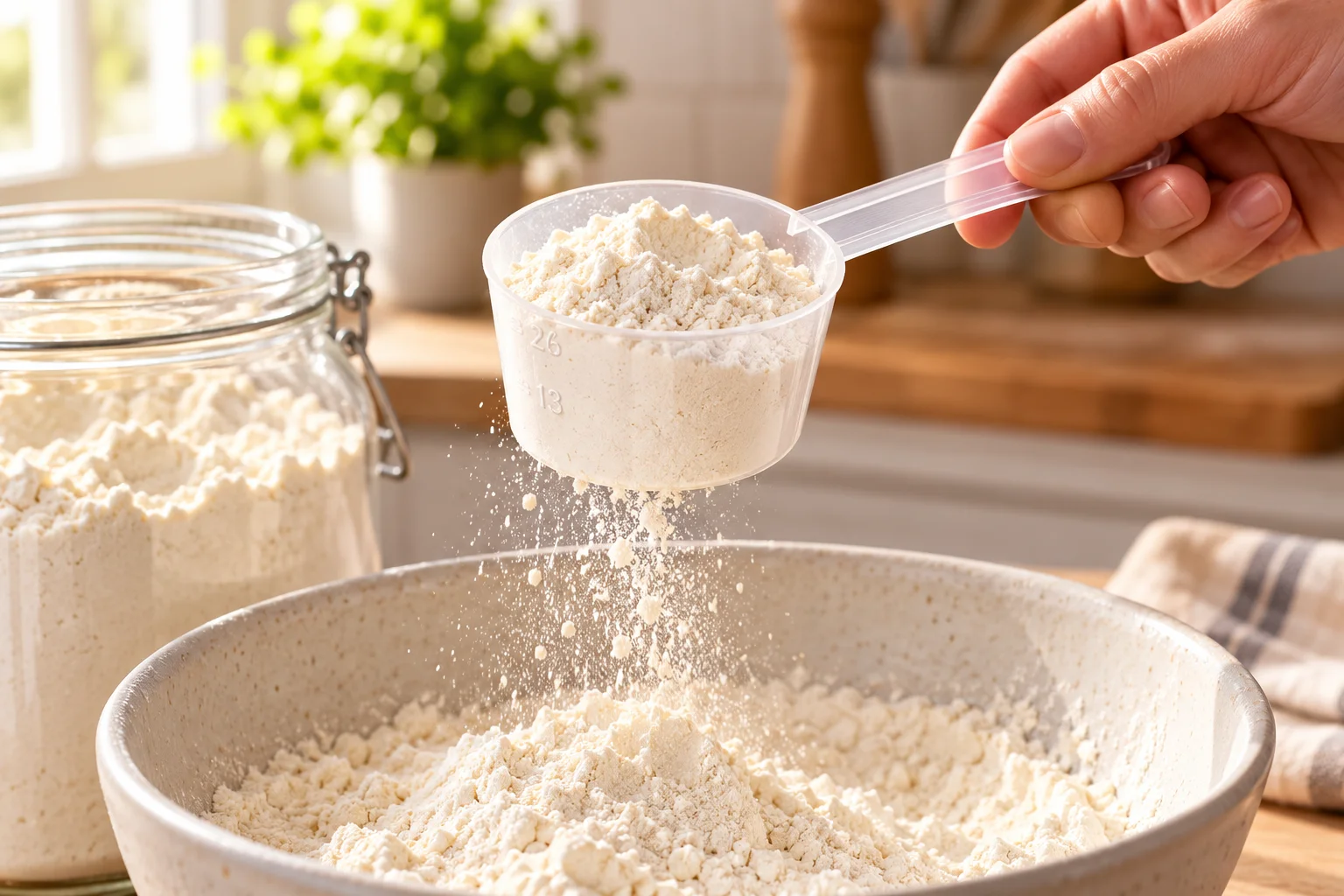
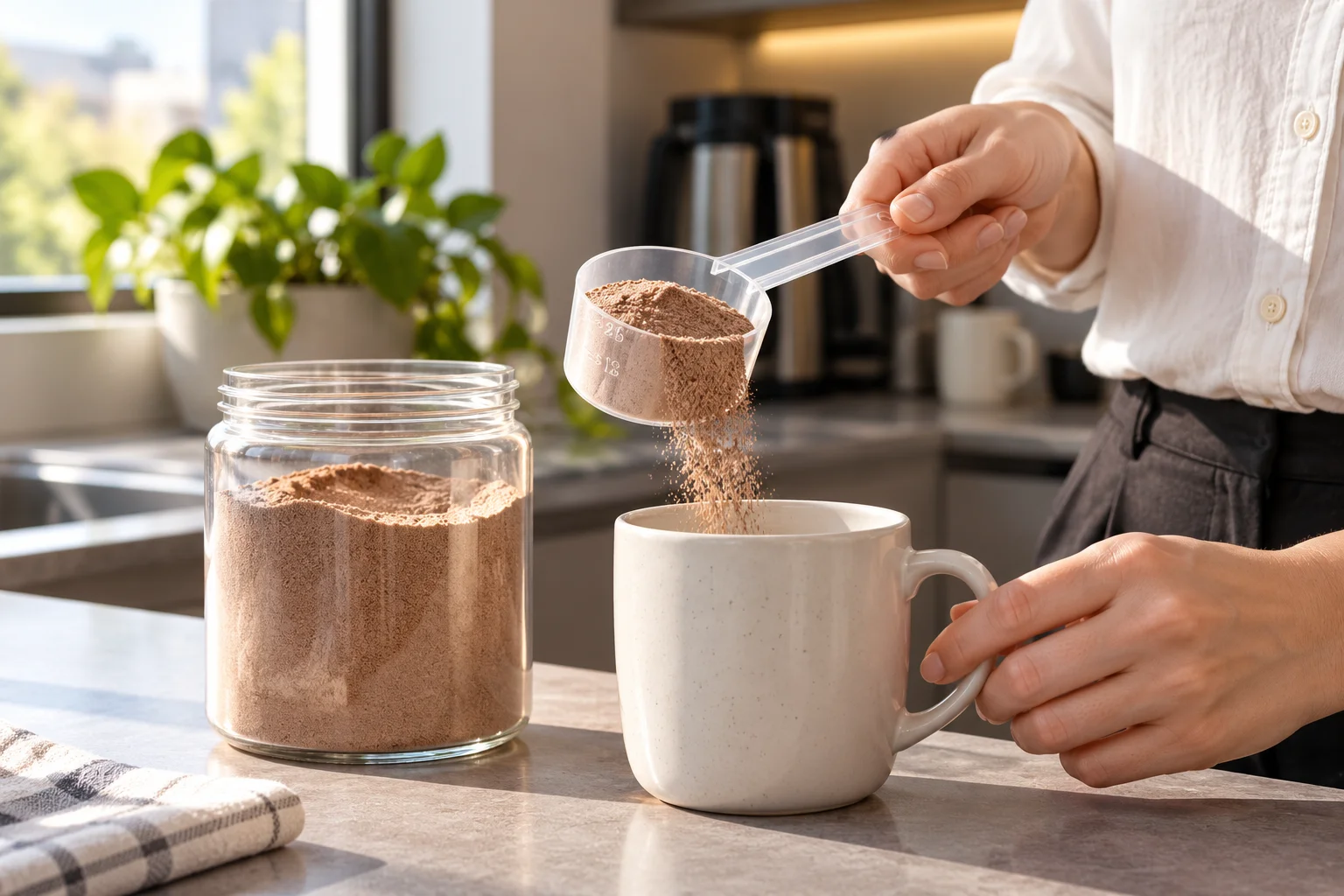
In a home kitchen, the clear cup makes dry ingredient level visible while adding it to a bowl. At an office drink station, it can transfer powdered beverage mix to a mug. These scenes show useful contexts, without suggesting that different powders weigh the same at the same volume.
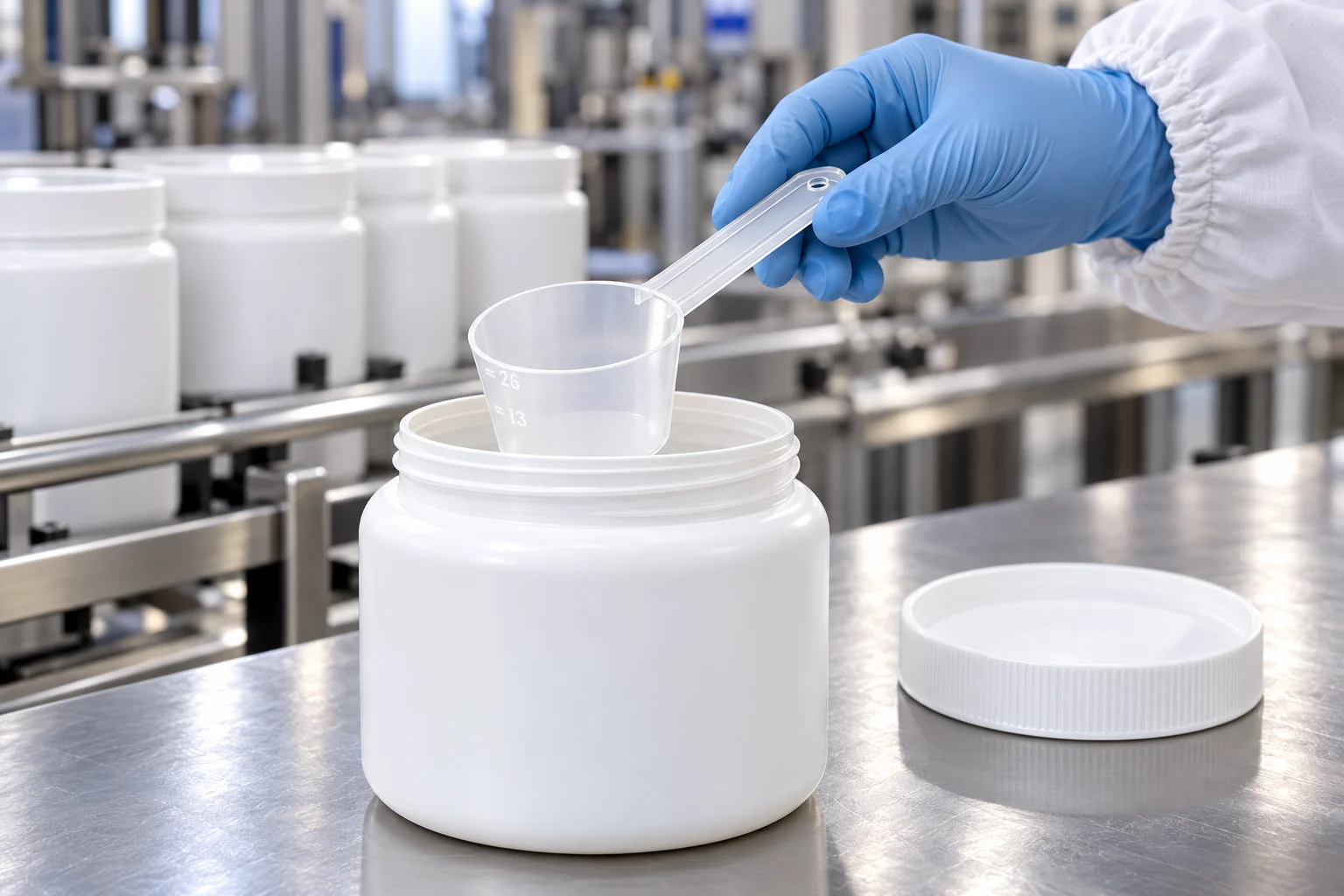
For a brand, including a scoop with a powder jar helps customers find the tool with the product. Check that handle and cup pass through the selected jar neck and sit under its cap in a physical sample. Cleaning and hygiene directions should be set for the finished product.

Three Practical Points of Use

Dry Ingredients at Home
The side mark can be seen while adding powder to a mixing bowl. If a recipe specifies grams, weigh that ingredient rather than assuming a volume-to-weight conversion.

A Drink at Work
The long handle supports transfer from jar to cup. The serving amount still comes from the powder’s own label.

Verify Grams on a Scale
Weigh a level 13 or 26 mark with your exact powder. A result from one formula cannot automatically be applied to another.
Test Jar, Scoop and Label on the Same Sample
For a dry-powder packer, marks matter only if the scoop fits the whole product system. Test handle passage through the jar mouth, access to the powder, lid closure and position inside the pack with the actual container. The clear smooth scoop is listed as a neutral unprinted companion.
Recorded minimum order is 10,000 pieces. The catalogue contains 13/26 cc capacity marks and a separate 25 cc nominal-volume field; resolve these with a physical sample when approving purchase specifications. Weight, directions and regulatory claims must match the actual powder and market.

Four Points for Scoop Selection
13/26 marks
Two visible volume references in the clear cup.
PP code 5
Material listed as BPA-free and food-contact suitable.
Long flat handle
Transfer powder from jar to shaker, mug or mixing bowl.
10,000 pieces
Recorded minimum order; sample fit is advised.
Frequently Asked Questions
How many grams are 13 or 26 cc?
There is no universal gram equivalent. Density and filling method vary; weigh the actual formulation.
Why do 25 cc and 13/26 cc both appear?
The API shows 25 cc as nominal volume and 13/26 cc in its capacity field. Confirm final specification with a physical sample and manufacturer.
What material is the scoop?
It is PP polypropylene code 5 made by injection moulding. The product record describes it as BPA-free and food-contact suitable.
Will it fit my jar?
Jar neck and height differ. Test the scoop and lid together with your chosen container.
What is the minimum order?
The product record lists a minimum order of 10,000 pieces.